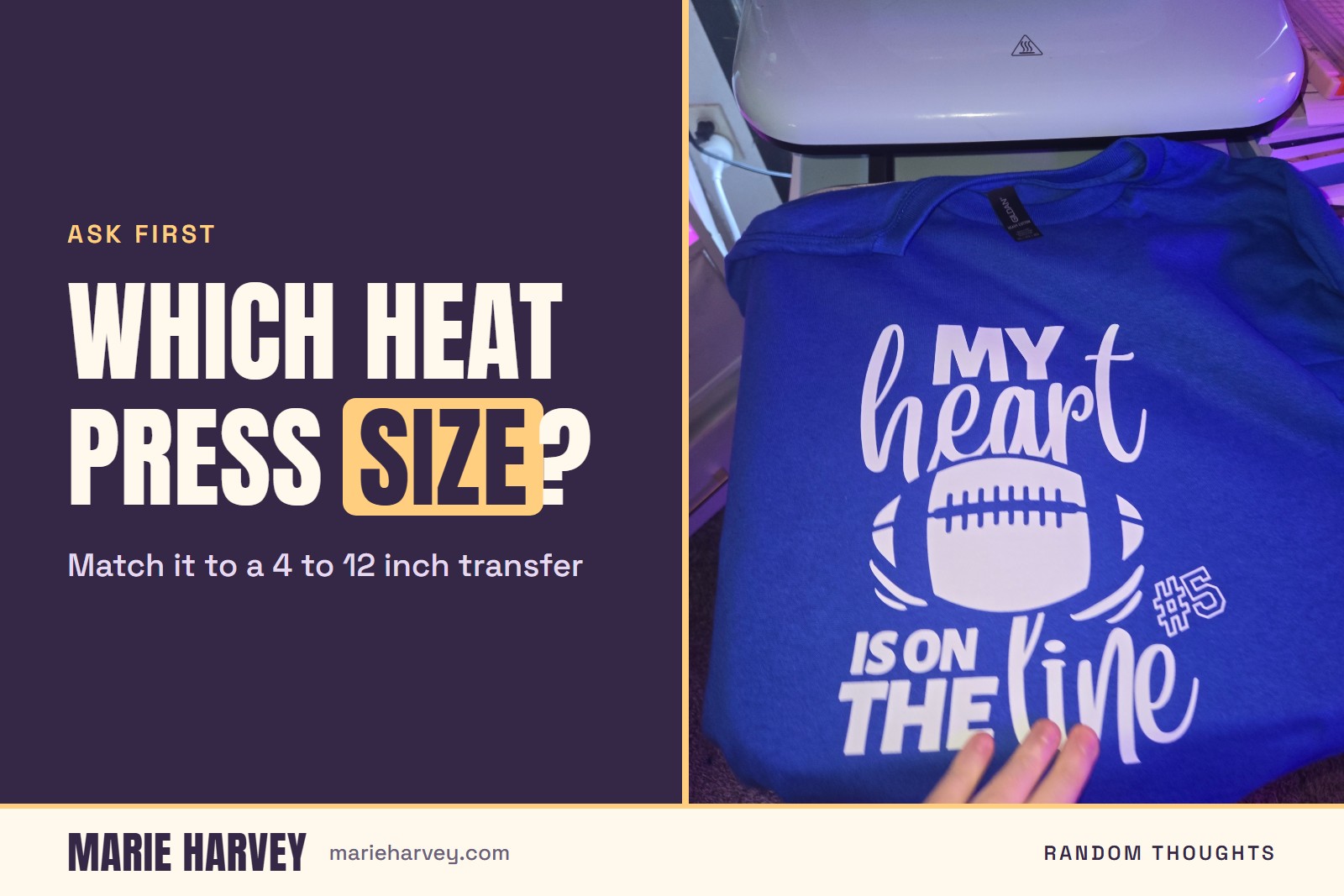
For Marie Gems transfers, which come in 4, 6, 8, 10, and 12 inch sizes and press at 320°F for 15 seconds with a cold peel, the number that decides your heat press is the platen size. A 15x15 platen gives more room than a 12x10. A 12x10 platen needs a closer look, because a transfer's size label is not its exact width and height. Hats and tumblers need different presses altogether. Here is how the options on my lists sort out.
Disclosure: some links in this post are affiliate links, and as an Amazon Associate, I earn from qualifying purchases, at no extra cost to you.
What size heat press do you need for DTF transfers?
Match the platen to your biggest transfer, not your average one. Most of what a shop presses may be small, but the day a 12 inch design comes through, a platen that is too small for it turns into a problem. The HTVRONT auto heat press 15x15 for T-shirts on my Sublimation Starter Kit list is a 15 by 15 inch platen with auto release, and it was about $236 as I write this. Amazon prices move, so check the listing.
Is a 12x10 heat press big enough?
It depends on the real width and height of your artwork, so check both before you buy. The HTVRONT heat press 12x10 with a pressure display sits on my Marie Gems Business Supplies list, and it is described as portable. A size label like 12 inch is nominal, and the artwork keeps its own shape, so a 12 inch transfer is not necessarily a 12 by 12 inch square. Take the actual width and height of your design and compare them against both sides of the platen, 12 inches and 10 inches, with room left around the edges for placement. If either measurement runs over, this press is the wrong fit for that design. If your work stays in the smaller sizes and the measurements check out, a portable press is a reasonable fit. The pressure display is worth noting too, since even pressure is part of a transfer that lasts.
What settings does the press need to reach?
Whatever press you buy has to hit and hold the settings your transfers call for. Marie Gems' spec is 320°F for 15 seconds, then a cold peel, which means letting the transfer cool before you pull the film. Check that a press shows temperature and time on a display you can read, and that it heats the whole platen evenly. A press that only gets close to the number is how you end up reprinting a design. My DTF Business Starter Kit list on Benable makes the same point about its heat press entry: my note calls it the one piece of equipment worth not skimping on, because even temperature across the plate matters more than anything else. The same list has an infrared thermometer gun, which my note describes as a cheap way to check that your press plate is actually hitting temp.
Do hats and tumblers need a different press?
Yes, both do. A hat has a curved crown, so it needs a press made for that shape, and the HTVRONT auto hat press machine on my Business Supplies list is the one for that job. The tumbler presses on my Sublimation Starter Kit list, including an auto press for 11 to 30 ounce tumblers and a 40 ounce handle attachment, are sublimation gear. Sublimation is a different method from DTF, and DTF vs. sublimation vs. HTV explains where each one fits.
What else should you compare besides platen size?
Compare how the press handles time, pressure, and release. The 15x15 HTVRONT is listed with auto release, which means the press opens on its own when the timer ends, and that matters when the instruction is exactly 15 seconds. The 12x10 lists a pressure display, which lets you see the pressure instead of guessing it. Both details take a variable out of the process. A press that gets the temperature right but leaves time and pressure to guesswork still gives you inconsistent transfers, so read those parts of the listing as carefully as the size.
Do you need a printer to own a heat press?
No. The press is the pressing step, and it is the same whether you print your own transfer film or buy transfers ready to press. I run my own printer, film, ink, powder, and heat press at Marie Gems, and how ready-to-press DTF transfers are made walks through that process. The PUNEHOD R1390 A3 DTF printer with oven is on my Business Supplies list for anyone who wants to print their own, and it is a much bigger purchase than a press, so it is worth deciding on separately.
The bottom line on choosing a heat press
Choose the press by the largest transfer you will press, measured by its real width and height, then add a hat press only if you press hats. If a 12 inch design is on your list, the 15x15 platen gives you more room, and the 12x10 works only if that design's actual width and height fit it. Either way, confirm it can reach 320°F and show you the time before you buy.