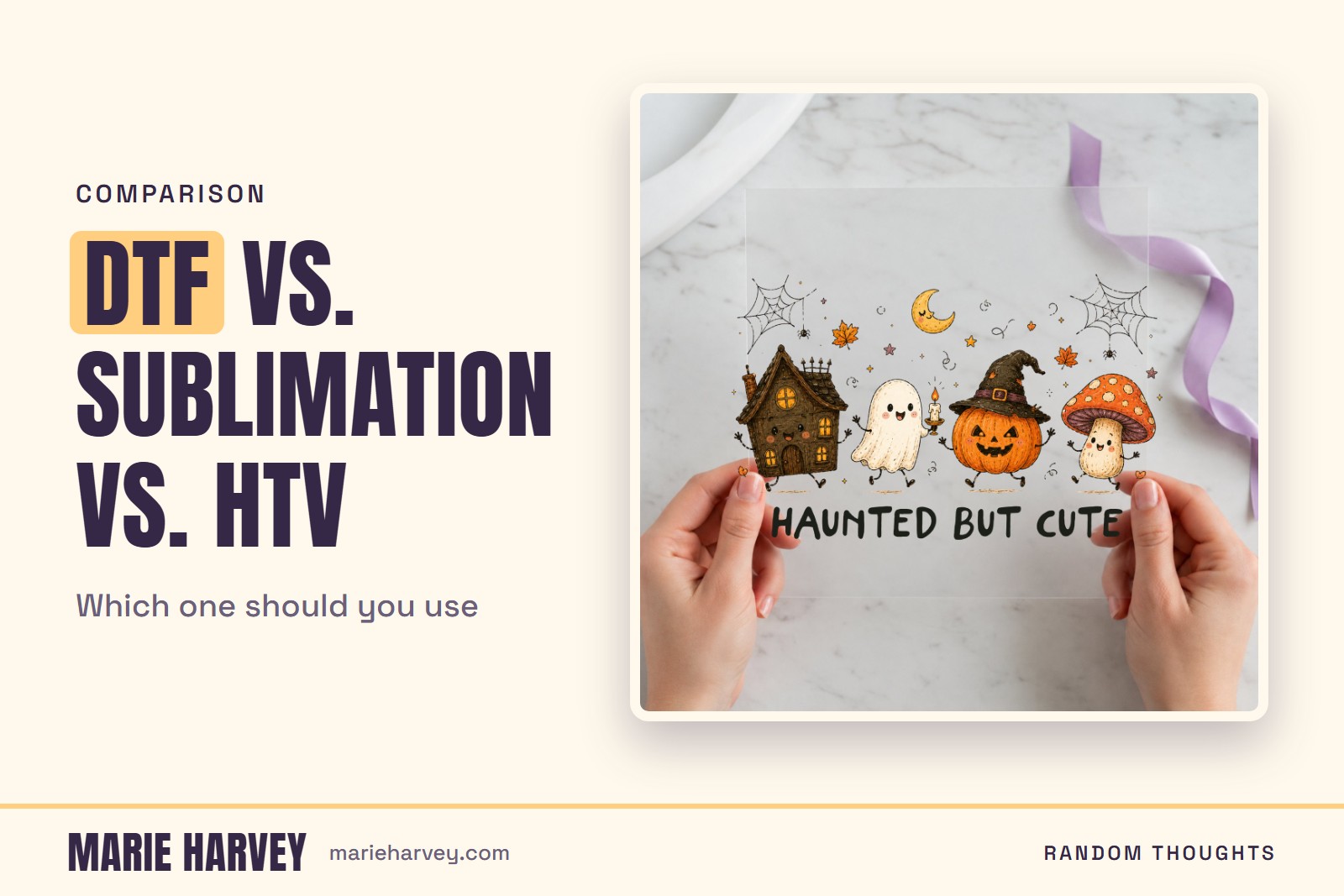
If you're getting into custom apparel or drinkware, the first real decision isn't your design — it's which printing method actually fits what you're making. DTF, sublimation, and HTV all produce different results, and picking the wrong one for your product means fighting the process the whole way through.
DTF (direct-to-film)
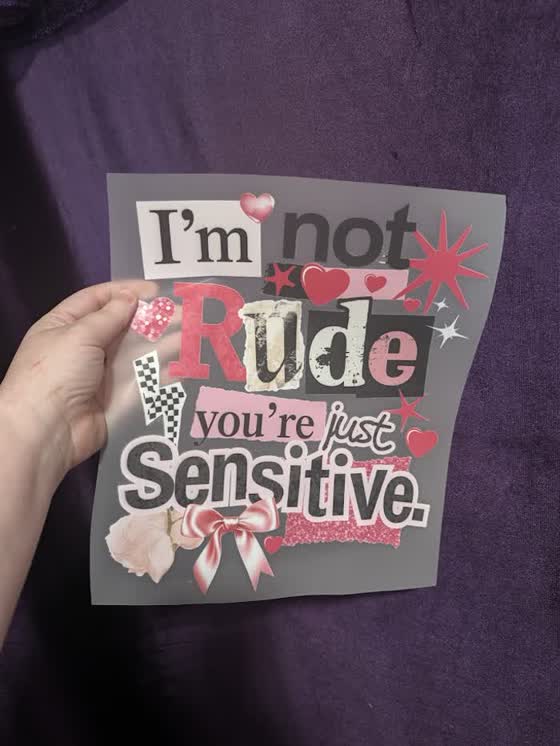
DTF transfers print onto a special film and then get pressed onto the final product. The biggest advantage is flexibility — DTF works on nearly any fabric type or color, including dark fabrics and blends that other methods can't handle well. That range is exactly why Marie Gems' current focus is DTF: it doesn't force you to limit what materials you can work with.
Sublimation
Sublimation produces vibrant, permanent results by turning ink into gas and bonding it directly into the material. The catch is that it only works on polyester or poly-coated surfaces — cotton and most natural fabrics won't hold sublimated ink at all. If you're working exclusively with polyester blanks, sublimation can look incredible. Outside of that material range, it's simply not an option.
HTV (heat transfer vinyl)
HTV is cut rather than printed — vinyl gets cut into a shape or design using a cutting machine, then weeded and pressed onto the final product. It's a strong choice for simple shapes, single-color designs, or text, but it doesn't handle complex, multi-color, photo-style designs the way DTF or sublimation can.
How to actually decide
The decision comes down to your product and your design, not what's currently trending. Multi-color, photo-realistic designs across a range of fabrics? DTF is built for that. All-polyester product line and want maximum vibrancy? Sublimation. Simple shapes, single colors, low volume? HTV might be the most efficient option.
For Marie Gems, DTF won out specifically because of that fabric flexibility — it means the shop isn't boxed in by material restrictions the way sublimation or HTV would require. That's the real question to ask yourself before picking a method: what does your actual product line need, not just what looks good in someone else's shop.